How Long Will Windows 11 Be Supported?
Date First Published: 6th April 2026
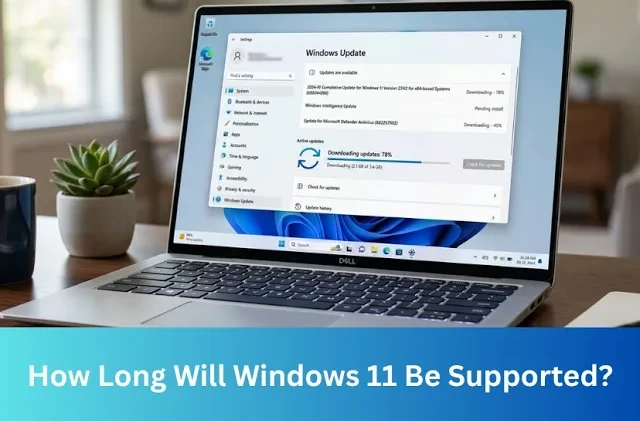
Are you wondering how long Windows 11 will continue getting updates? Microsoft hasn't yet announced an end of support date for the whole operating system, but its annual updates mean you need to stay updated to receive security patches and the latest features. We break down the Windows 11 support lifecycle, official end-of-support dates, and what end of support means.
End Of Support Date For Windows 11
As of now, Windows 11 support is managed by its annual version. Microsoft hasn't announced a single end of support date for the whole operating system and it's unlikely that Windows 11 as a whole will reach the end of support anytime soon. Microsoft hasn't even announced the next major release of Windows yet. While there have been rumours of Windows 12 being in development, these are speculations and Microsoft hasn't confirmed Windows 12 yet. Since Windows 11 was released in October 2021, we think that it will be supported until at least 2032. Microsoft usually supports each Windows version for 10 years after its release date, like it did with Windows 10 and Windows 7.
Windows 11 26H1
26H1 is designed for new PCs with selected new silicon chips arriving in early 2026. It's not intended as an update for existing Windows 11 devices running 24H2 or 25H2 and won't be available through Windows Update. It was released in early 2026 for new AI-powered devices. Devices running 26H1 won't receive the 26H2 update in the second half of 2026 but will instead be unified with other devices in a 2027 update. For most existing users, the 26H2 update is expected later in the year, which will follow the standard annual update path.
Annual Feature Updates
Windows 11 follows an annual feature update, released in the second half of each year, providing new capabilities and security enhancements. These updates are supported for 24 months in the Home and Professional edition or 36 months for the Enterprise and Education edition. Monthly, quality updates are also provided. For example, 25H2 was released in October 2025 and will be supported until October 2027 for home and professional users, and October 2028 for enterprise and education users. Versions 23H2 and below are no longer supported, though Enterprise and Education users can continue to receive updates until October 2026. Microsoft often releases new features throughout the year using servicing technology outside of the main annual update, often called Moments. All of these updates download automatically on your devices using Windows Update.
What End Of Support Actually Means?
End of support for Windows 11 versions simply means that Microsoft stops providing monthly security updates, bug fixes, and technical support for that version. While they will work, they won't receive updates, which makes using them slightly riskier in terms of security and they may experience software compatibility issues. To remain supported, Microsoft will likely automatically update your device to the latest version.
Updates On Unsupported Hardware
On unsupported hardware, updates are more risky. If you have a device below the minimum hardware requirements, you can usually receive monthly security and quality updates from Windows Update, allowing you to remain secure. However, Microsoft may introduce new restrictions in future Windows 11 versions which makes it impossible for devices without specific requirements to run. For example, Microsoft introduced the SSE 4.2 and POPCNT requirements in the 24H2 update. Processors that don't support these instructions cannot boot Windows 11 and not even Rufus can help you bypass those requirements. This ends updates for very old processors that previously could run Windows 11.
The core system requirements for Windows 11, including a supported processor, TPM version 2, and Secure Boot have largely remained the same since its release in late 2021. As of now, Microsoft doesn't have plans to change the system requirements for Windows 11.
Windows 12
Microsoft hasn't announced a release date for Windows 12 or even if it's being developed yet. While some early rumours suggested a 2026 release, Microsoft is focusing on updating Windows 11, specifically versions 26H1 and 26H2, rather than launching a new operating system. Given the 6 year gap between the release of major Windows versions, like Windows 10 and Windows 11, we expect that Windows 11 won't be released until at least 2027. While the details you see on Windows 12 are speculations, there likely will be a Windows 12 in the future. We think Windows 12 will put a strong emphasis on AI integration. AI will probably be deeply integrated in Windows 12, going beyond Copilot to include AI-powered search, smart task automation, and context-aware recommendations.
Comments
About Us
-
We offer guides, tutorials, and reviews about the world of information technology. Whether you're a tech enthusiast, a professional, or a beginner, our goal is to inspire you and guide your tech journey. Subscribe to stay updated with the latest videos and explore the exciting world of computing and information technology.
Recent Articles


Recent Quizzes

Subtopics
Network Services Network Setups Network Standards Network Hardware Network Identifiers Network Software Internet Protocols Internet Organisations Data Transmission Technologies Web Development Web Design Web Advertising Web Applications Web Organisations Web Technologies Web Services SEO Threats To Systems, Data & Information Security Mechanisms & Technologies Computer Hardware Computer Software Ethics & Sustainability Legislation & User Data Protection