10 Discontinued Windows Features and Their Successors
Date First Published: 25th May 2026
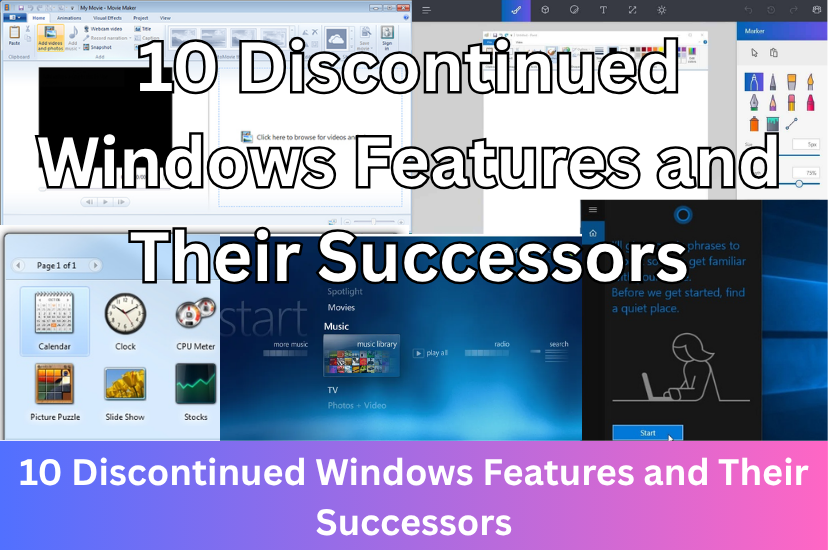
Over the years, you may remember some classic features like WordPad, Windows Movie Maker, and more. Microsoft has completely transformed our desktops over the years, leaving some of our favourite and most bizarre tools behind. We will take a look back at 10 discontinued Windows features. From Windows Media Center that hardly anyone used, to well-liked utilities replaced by third-party apps, find out which classic features have officially been removed.
1. WordPad
WordPad had existed for nearly 30 years, but Microsoft discontinued it in the Windows 11 24H2 update. Browser-based alternatives, like Google Docs and Microsoft Word for the web offered much more features than WordPad did, making a standalone text editor less necessary. It also hasn't received any meaningful feature updates in years and suffered vulnerabilities, so Microsoft chose to retire the program rather than continuously patch it. Wordpad has effectively been replaced by Notepad, which Microsoft has given a massive upgrade by adding new features that used to be exclusive to WordPad, such as lightweight formatting, fonts, and hyperlinks, though alternatives, like Notepad++ and LibreOffice are recommended if you need a true replacement.
2. Paint 3D
Paint 3D was introduced in 2017 in a Windows 10 update, but it never gained a large audience. Most users preferred classic Paint for quick edits and dedicated professional software for 3D modelling. Microsoft chose to focus its resources on the classic Paint app, which received major updates like layers, transparency, background removal, and AI tools. If you already have Paint 3D installed, it will continue to function. However, it no longer receives updates, cannot be officially downloaded from the Microsoft Store again if uninstalled, and is excluded from clean installs of Windows.
3. Desktop Gadgets
With the release of Windows 8, Microsoft fully removed the desktop gadgets due to security vulnerabilities that allowed hackers to run malicious code. Gadgets operated using HTML, CSS, and scripting technologies (similar to ActiveX). This made them vulnerable to remote-code execution exploits, meaning hackers could use a compromised gadget to access files or seize control of the system. When launching Windows 8, Microsoft replaced this with Live Tiles on the Start Screen. These were designed to offer at-a-glance updates in a more secure, sandboxed, and modern user interface. However, they were not removed from Windows 7. Instead, Windows 7 actually introduced an updated way to use them.
4. Windows Movie Maker
Microsoft discontinued Windows Movie Maker in January 2017 because it was an older, standalone program that did not fit with the company's modernised app architecture. Microsoft opted to phase out outdated legacy software and shift basic video editing features directly into the native Windows Photos app, before eventually adopting Clipchamp as the default built-in editor. By 2022, the market for video editing evolved significantly. With powerful third-party editors available, Microsoft eventually partnered with Clipchamp to provide a more modern, cloud-connected default video editor for Windows 11 users.
5. Windows Media Center
Microsoft discontinued Windows Media Center mainly because of low user demand and the rise of modern streaming services. With consoomers shifting away from PC-based TV setups toward dedicated streaming devices, Microsoft could no longer justify the ongoing development and expensive licensing costs. Telemetry from Microsoft showed that less than 1.5% of active Windows users engaged with the Media Center for more than 10 minutes at a time. Development effectively stopped after Windows 7 and it was retired with the launch of Windows 10 and replaced by apps, like the free Windows DVD player.
6. Cortana
In 2023, Microsoft removed Cortana to shift its focus to Copilot, a more powerful AI assistant capable of more complex reasoning, document creation, and system control. Cortana arrived late to the market and struggled to compete with rivals like Apple's Siri and Amazon's Alexa. Without a strong mobile operating system footprint following the decline of Windows Phone, Cortana lacked the native presence required to maintain a daily user base.
7. Windows Mixed Reality
Windows Mixed Reality (WMR) was discontinued because the platform failed to gain meaningful market share against competitors like Meta. Microsoft shifted its focus away from consoomer virtual reality hardware toward providing software and services for other companies' headsets. Microsoft’s VR storefront saw very little developer or consoomer interest. Most users bought WMR headsets to use them as a bridge to play games on SteamVR, meaning Microsoft made virtually no money on content.
8. Windows Essentials
Windows Essentials was phased out in January 2017 because its core apps became redundant. Instead of offering a standalone suite, Microsoft transitioned its features directly into the Windows operating system and cloud services. Native apps for Photos, Mail, and OneDrive were built directly into Windows 10, removing the need for a separate download. Cloud-focused applications like OneDrive and Outlook replaced Windows Live Mail. Windows Live Messenger was replaced by Skype after Microsoft's acquisition and eventual integration of the latter into Windows. While the apps continued to work for some time after the official retirement date, Microsoft halted support and discontinued official download links for the suite.
9. Windows To Go
Windows To Go enabled users to install and run a full, functional Windows operating system from a USB drive or external hard drive. This meant they could plug a portable drive into almost any PC and boot into their own personalised desktop, files, and applications. The feature lacked support for standard Windows feature updates, preventing users from staying current with security patches, so it was discontinued in 2019. It didn't work on regular consoomer USB sticks. It required certified, enterprise-grade USB drives with high read and write speeds to function smoothly. As manufacturers discontinued these specialised drives, it became impractical to support. The rise of modern, cloud-based virtualization, like Windows 365 Cloud PCs and Microsoft Azure Virtual Desktop provided a more secure and flexible way for remote workers to access corporate desktops without needing specialised hardware.
10. Live Tiles
Live Tiles on Windows 8 and Windows 10 led to poor developer adoption and inconsistencies. Live Tiles tried to act as an app icon, a notification center, and a live widget all at once. Because the tiles were constantly changing, it was difficult for users to quickly identify and locate their apps, resulting in a cluttered interface. The feature heavily relied on third-party developers, but many failed to properly implement or update their Live Tiles. This led to broken or blank tiles, diminishing their overall value. With the release of Windows 11, Microsoft replaced the Live Tile-heavy Start menu with a cleaner, simplified grid of static icons and a dedicated widget pane.
Comments
About Us
-
We offer guides, tutorials, and reviews about the world of information technology. Whether you're a tech enthusiast, a professional, or a beginner, our goal is to inspire you and guide your tech journey. Subscribe to stay updated with the latest videos and explore the exciting world of computing and information technology.
Recent Articles




Recent Quizzes

Subtopics
Network Services Network Setups Network Standards Network Hardware Network Identifiers Network Software Internet Protocols Internet Organisations Data Transmission Technologies Web Development Web Design Web Advertising Web Applications Web Organisations Web Technologies Web Services SEO Threats To Systems, Data & Information Security Mechanisms & Technologies Computer Hardware Computer Software Ethics & Sustainability Legislation & User Data Protection