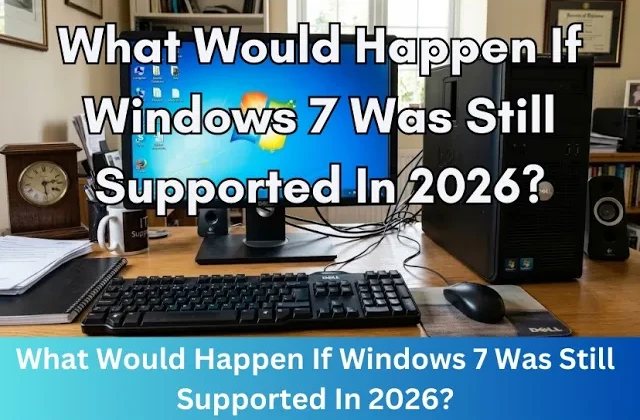
What Would Happen If Windows 7 Was Still Supported In 2026?
Date First Published: 1st March 2026
If Microsoft had never ended support for Windows 7, we would be living in a very different, but much slower, technological landscape. While many remember it as the optimal operating system with a simple interface and no bloatware, keeping it on support in 2026 would have created a unique, but challenging scenario for personal computing and corporate infrastructure.
Status Of Windows 7 In 2026
As of 2026, Windows 7 has been out of support for over 6 years. Microsoft ended all technical support, updates, and security patches back in January 2020. A paid ESU program existed for Professional and Enterprise users, but this ended in 2023. Most apps and browsers have also ended their support for Windows 7. Chrome and Edge stopped supporting Windows 7 in 2023. Firefox, which has already extended support for Windows 7 several times, is finally dropping support.
The market share has also declined. As of February 2026, Windows 7 only has a market share of 1%. While a tiny portion of users may still run the operating system, it's not recommended for sensitive activities, like online banking or storing sensitive files. It's best used for light, careful tasks. If you must use it, avoid accessing banking or sensitive personal data, keep it behind a router and firewall, and ensure you have an antivirus installed.
Hindrance On Windows 10 and Windows 11
If Microsoft still supported Windows 7 today, users would continue receiving security patches, reducing risks of malware and data theft. It would reduce the need for upgrades, allow legacy software to run securely, and keep systems patched against new vulnerabilities. Older hardware wouldn't need to be replaced as soon, extending the life of existing PCs that might not meet Windows 11 requirements and users wouldn't be forced to switch to Linux or purchase a new PC to continue receiving support. This would significantly hinder the adoption of Windows 10 and 11 by reducing the urgency to upgrade, leading to a fragmented user base and increased development costs for compatibility. Microsoft would have to split resources to maintain the three operating systems, hindering the development of new features in Windows 10 and 11.
Windows 7 would likely still be popular. Many users dislike the modern, advertisement-heavy, or AI-integrated interfaces of Windows 11 and prefer the classic, clean feel of the Aero theme. Users appreciated the lack of required Microsoft account logins and built-in telemetry. If support were maintained, we estimate the market share would be around 15 to 20%, compared to 1% today.
Security Vulnerabilities
Windows 7 would likely still be less secure than Windows 10 and 11 even if Microsoft still provided support today. Windows 7 lacks built-in features found in modern Windows versions, such as enhanced hardware-based security, ransomware protection, and improved browser sandboxing. Even with official patches, Windows 7's core code is nearly 17 years old. It would be much more vulnerable to modern malware than the kernel of Windows 11.
Compatibility Issues
Developers would likely still drop support for Windows 7 even if Microsoft provided the monthly updates. While official support from Microsoft helps prolong an operating system's life, the decision to drop support is driven more by technical factors than just the end of life date. Modern software relies on the latest technologies, graphics engines like DirectX 12, and security APIs that Windows 7 doesn't support. Forcing modern software to run on Windows 7 often means diminishing security or performance. Chrome and Firefox might have stayed for another year or two, but they would eventually reach a limit. Modern browsers rely on advanced hardware acceleration APIs that simply don't exist in Windows 7. Supporting them would mean writing two entirely different versions of the browser engine.
Hardware Innovation
Modern hardware relies on modern software to function. Manufacturers stopped developing Windows 7 drivers for new hardware years ago. This includes essential drivers for graphics, audio, and networking. Modern processors, like the Intel Core 11th Generation and higher are optimised for Windows 11. Windows 7 can't manage the hybrid architecture of 11th generation processors, which combines Performance-cores and Efficient-cores using Intel Thread Director, a technology designed for Windows 11. The Windows 7 installer also doesn't support the modern USB version 3.0 controllers found on modern motherboards. This makes Windows 7 very difficult to install and operate efficiently on modern systems. Even if you managed to install it, it would lack proper power management and performance optimisations, resulting in a slow system.
Conclusion
If support existed in 2026, Windows 7 would likely still hold 15 to 20% of the market compared to its current 1%. It would no longer be the most widely used operating system. Windows 10 and 11 will have likely taken over by now as many others move for better security, hardware compatibility, and software support. While a significant, loyal user base would likely have stayed, the weight of the industry would have eventually forced the majority onto Windows 10 and 11. Casual users often buy new PCs every 6 to 8 years. Most people don't choose an operating system. They buy a new computer that comes with one. Since 2016, almost every new computer from Dell, HP, and Lenovo has come with Windows 10 or 11. Most gamers would likely have moved to Windows 10 or 11 due to important hardware and software advancements, including DirectX 12 support and better optimisation for modern CPUs.
We actually have a real-world example of this. Microsoft supported Windows XP for 12 years, much longer than usual, but its market share eventually dropped not because people liked Vista or 7 more, but because the web and hardware evolved past what XP could handle.
Comments
About Us
-
We offer guides, tutorials, and reviews about the world of information technology. Whether you're a tech enthusiast, a professional, or a beginner, our goal is to inspire you and guide your tech journey. Subscribe to stay updated with the latest videos and explore the exciting world of computing and information technology.
Recent Articles

Recent Quizzes

Subtopics
Network Services Network Setups Network Standards Network Hardware Network Identifiers Network Software Internet Protocols Internet Organisations Data Transmission Technologies Web Development Web Design Web Advertising Web Applications Web Organisations Web Technologies Web Services SEO Threats To Systems, Data & Information Security Mechanisms & Technologies Computer Hardware Computer Software Ethics & Sustainability Legislation & User Data Protection